

When Spine Pain Is a Warning Sign for Osteosarcoma
Introduction: When Back Pain Deserves a Closer Look
Back pain is one of the most common physical complaints across all ages. It is often attributed to posture, muscle strain, overuse, or aging. For most people, discomfort improves with rest, physical therapy, or simple lifestyle adjustments. Because spine pain is so familiar, it is easy to dismiss lingering symptoms as “normal” or temporary.
However, not all spine pain is benign. In rare cases, persistent or worsening discomfort can be an early warning sign of serious underlying conditions, including bone cancers that affect the spine or surrounding structures. Osteosarcoma, while uncommon, is one such condition that can present subtly before becoming severe.
Understanding when spine pain signals something more than a mechanical issue is essential. Recognizing red flags and knowing when to seek further evaluation can make a meaningful difference in diagnosis, treatment outcomes, and long-term health.
Understanding Osteosarcoma and the Spine
Osteosarcoma is a type of bone cancer that originates in bone-forming cells. It most commonly affects long bones such as the femur or tibia, but it can also develop in the spine or in bones near spinal structures. When this occurs, symptoms may be mistaken for typical back problems.
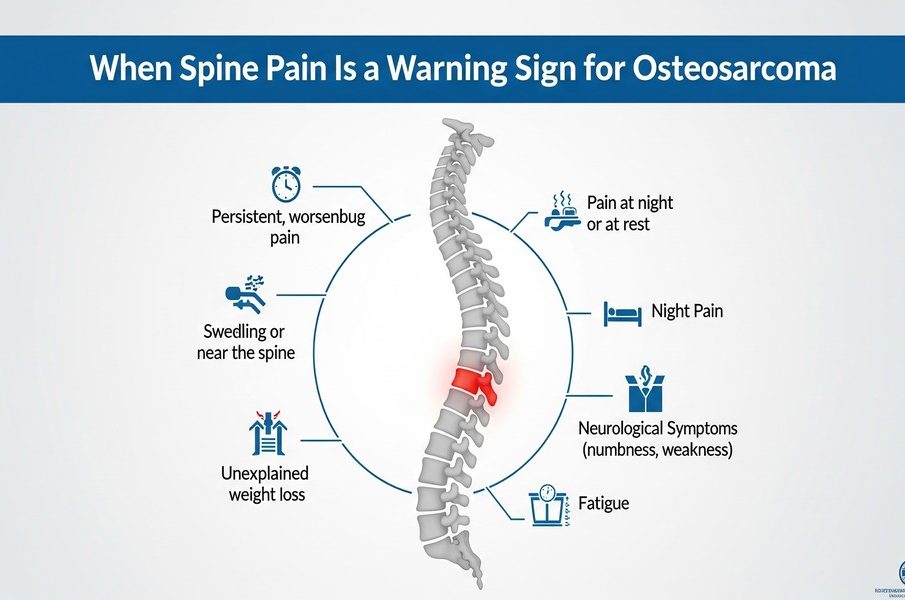
Spinal osteosarcoma can cause pain due to tumor growth within the bone or pressure on nearby nerves. Unlike muscle strain, this pain often persists despite rest and may worsen at night or with minimal activity. In some cases, neurological symptoms such as numbness, weakness, or changes in coordination may develop as the tumor affects surrounding tissues.
Because spinal tumors are rare, awareness is critical. Early symptoms may be subtle, but understanding how osteosarcoma behaves in spinal regions helps patients and clinicians recognize when further investigation is warranted.
Early Pain Patterns That Raise Concern
Pain associated with serious spinal conditions often follows a different pattern than common back pain. Instead of improving over time, it may steadily intensify or become more frequent. People may notice deep, aching pain that feels different from muscle soreness or joint stiffness.
Night pain is a particularly important warning sign. Pain that disrupts sleep or worsens when lying still may suggest a structural or pathological cause rather than mechanical strain. Similarly, pain that does not respond to anti-inflammatory medications or physical therapy deserves closer attention.
In some cases, swelling, tenderness over a specific spinal area, or unexplained weight loss may accompany discomfort. These additional symptoms help distinguish routine musculoskeletal pain from conditions that require more advanced diagnostic evaluation.
When Cancer Enters the Diagnostic Conversation
Although rare, osteosarcoma affecting the spine must be considered when pain presents with red flags. Oncology specialists emphasize the importance of imaging studies-such as MRI or CT scans-when symptoms are persistent, progressive, or unexplained.
Centers specializing in sarcoma care, such as Sarcoma Oncology Center, focus on evaluating conditions like osteosarcoma-related back pain and determining whether bone tumors are present. Their involvement often comes after initial symptoms fail to resolve or when imaging suggests abnormal bone changes.
This step in the diagnostic process is not about alarm, but about precision. Early identification allows for timely treatment planning and avoids delays that could affect outcomes.
The Role of Spine Evaluation in Detecting Serious Conditions
Before cancer is suspected, many patients first seek evaluation for back pain from spine-focused providers. A thorough spine evaluation assesses posture, mobility, neurological function, and pain patterns to determine whether symptoms align with common spinal disorders or something more complex.
Spine doctors-such as those providing care at CalSpine MD, including spine evaluations-are trained to recognize when symptoms fall outside typical musculoskeletal presentations. They may identify concerning signs such as localized bone tenderness, progressive neurological deficits, or pain patterns inconsistent with degenerative conditions.
When spine evaluations raise concern, referral for advanced imaging or oncology consultation becomes a critical next step. This collaborative approach ensures that serious conditions are not overlooked while avoiding unnecessary anxiety for patients with routine back issues.
Differentiating Mechanical Pain From Pathological Pain
Mechanical back pain usually changes with movement, posture, or activity. It often improves with rest and responds to conservative treatments. Pathological pain, by contrast, tends to be constant, deep, and less influenced by position or activity level.
Patients with spinal tumors may describe pain that feels “inside the bone” rather than muscular. This pain may persist even during periods of inactivity and gradually intensify over weeks or months. Understanding these distinctions helps guide decisions about when further evaluation is necessary.
Clear communication between patients and healthcare providers is essential. Describing pain quality, timing, and progression allows clinicians to differentiate routine spine conditions from those requiring urgent attention.
Primary Care and Early Symptom Recognition
Primary care providers often serve as the first point of contact for persistent back pain. Their role includes assessing overall health, identifying systemic symptoms, and determining whether referrals are needed. When spine pain is accompanied by fatigue, unexplained weight changes, or neurological symptoms, primary care evaluation becomes especially important.
Clinics offering comprehensive care-such as Grand Forks Clinic, which provides primary care and chiropractic care-can help monitor symptoms over time and coordinate next steps when pain does not improve. Chiropractic evaluation may reveal whether pain responds to conservative care or remains resistant, signaling the need for further investigation.
Early recognition at the primary care level helps ensure timely referral to specialists and reduces delays in diagnosing serious conditions.
Imaging, Biopsy, and Diagnostic Clarity
When red flags are present, imaging studies play a central role in diagnosis. MRI is often used to evaluate soft tissue involvement and nerve compression, while CT scans can reveal bone destruction or abnormal growth patterns. These tools help differentiate benign spinal conditions from tumors.
If imaging suggests a bone lesion, a biopsy may be required to confirm the diagnosis. This step is essential for distinguishing osteosarcoma from other bone disorders and determining appropriate treatment strategies.
Although the diagnostic process can feel overwhelming, each step provides critical information. Accurate diagnosis ensures that treatment is tailored to the individual’s condition and overall health.
Emotional Impact of Serious Diagnoses
The possibility of cancer can be emotionally distressing, especially when symptoms initially seemed minor. Anxiety, fear, and uncertainty are common responses during diagnostic evaluations. Acknowledging these emotions is an important part of patient-centered care.
Support from healthcare teams, family members, and mental health professionals can help individuals navigate this period. Clear communication about next steps and realistic expectations reduces uncertainty and empowers patients to participate actively in their care.
Addressing emotional well-being alongside physical symptoms helps patients maintain resilience throughout evaluation and treatment.
Conclusion: Listening When Pain Persists
Spine pain is common, but persistent or unusual discomfort deserves attention. When pain worsens over time, disrupts sleep, or resists standard treatments, it may signal more than a routine musculoskeletal issue. Recognizing these warning signs allows for timely evaluation and appropriate care.
A collaborative approach-bringing together spine specialists, oncology experts, and primary care clinicians-helps ensure that serious conditions such as osteosarcoma are identified as early as possible. This coordination supports accurate diagnosis, thoughtful treatment planning, and comprehensive patient support.
Ultimately, listening closely to persistent pain is an act of self-advocacy. Early evaluation does not assume the worst, but it creates space for clarity, reassurance, and, when necessary, timely intervention that protects long-term health.