

How Cleanroom Technology in Modular OTs Protects Patient Health
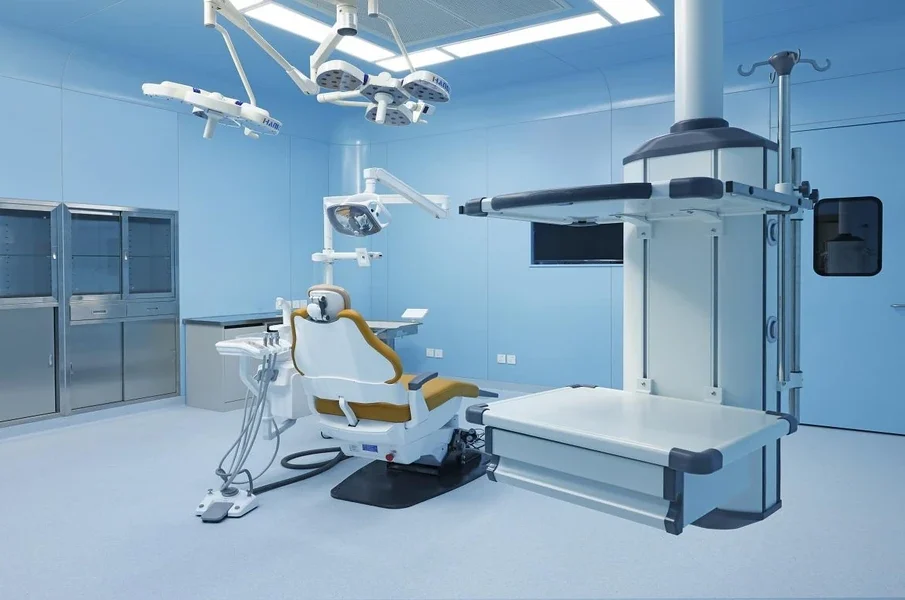
Modern surgery relies on far more than the skill of surgeons and advanced medical equipment. The operating environment itself plays a critical role in protecting patients from infection and ensuring successful outcomes. This is where cleanroom technology in modular OTs has become an essential part of modern healthcare infrastructure.
By combining controlled airflow, contamination-resistant materials, and strict environmental management, modular operating theatres create a cleaner and safer surgical environment that directly supports patient health.
What Is Cleanroom Technology in a Modular Operating Theatre?
Cleanroom technology refers to a set of engineering systems designed to control airborne particles, microorganisms, temperature, humidity, and air pressure within an operating theatre.
Unlike conventional operating rooms, modular OTs are built using prefabricated components that integrate cleanroom technologies from the design stage. Every element-from wall panels to ceiling systems and HVAC equipment-is engineered to minimize contamination and maintain a sterile surgical environment.
The result is an operating room that consistently meets stringent healthcare standards while reducing the risk of environmental contamination.
Why a Clean Surgical Environment Matters
Patients undergoing surgery are especially vulnerable to infections because surgical incisions create a direct pathway for bacteria and other microorganisms to enter the body.
Contaminated air, dust particles, or poorly maintained operating rooms can contribute to:
- Surgical Site Infections (SSIs)
- Hospital-Acquired Infections (HAIs)
- Longer hospital stays
- Increased healthcare costs
- Delayed recovery
- Higher rates of complications
Cleanroom technology helps reduce these risks by maintaining strict environmental control throughout every procedure.
Key Cleanroom Features That Protect Patients
1. HEPA-Filtered Air Systems
High-Efficiency Particulate Air (HEPA) filters remove up to 99.97% of airborne particles as small as 0.3 microns.
These filters significantly reduce airborne bacteria, dust, and contaminants before the air reaches the surgical field, helping maintain a cleaner environment around both patients and surgical staff.
2. Laminar Airflow
Laminar airflow systems deliver clean air in a uniform, downward direction over the operating table.
Unlike turbulent airflow, laminar flow minimizes the movement of contaminated particles and continuously pushes them away from the sterile zone. This is particularly valuable during orthopedic, cardiac, transplant, and implant surgeries where infection control is critical.
3. Positive Air Pressure
Modular operating theatres typically maintain positive pressure compared with adjacent corridors and preparation rooms.
This pressure difference prevents unfiltered air from entering whenever doors are opened, reducing the chance of airborne contaminants reaching the patient.
4. Antibacterial Modular Wall Panels
The walls and ceilings of modular OTs are constructed using smooth, non-porous, antibacterial materials.
These surfaces:
- Resist bacterial growth
- Prevent dust accumulation
- Are easy to disinfect
- Require minimal maintenance
- Eliminate cracks and joints where microorganisms can collect
The result is a cleaner environment that supports effective infection prevention.
5. Controlled Temperature and Humidity
Maintaining stable environmental conditions benefits both patients and surgical teams.
Proper temperature and humidity control:
Automated environmental monitoring ensures these parameters remain within recommended ranges throughout every procedure.